Japan: Part 5

My parents have left Japan, and so I have gone back to my regular schedule. We packed so many activities into the one week that they were in the country that I thought I would want a break, but just the opposite happened. I decided I wanted to continue doing and seeing as much as possible. On Wednesday, we had no classes. Spur of the moment, two of my friends and I decided to take an hour long train ride to a coastal town called Kamakura.

This started one of the best days I have had in Japan so far. We arrived at the station in Kamakura and as I walked outside, I felt a cool breeze that broke through the warm air carrying the scent of the sea. This was going to be the first time that I saw the open Pacific Ocean. We stopped at a convenience store to grab bread and meat for sandwiches on the beach. The closer we got to the ocean, the more our walking turned into jogging out of excitement. We saw palm trees and the blue ocean in the distance. After getting on the beach, I could have stared at the ocean for hours. Instead, after about a half hour, we decided to continue on to Enoshima, a small island that was about a 20 minute train ride away.
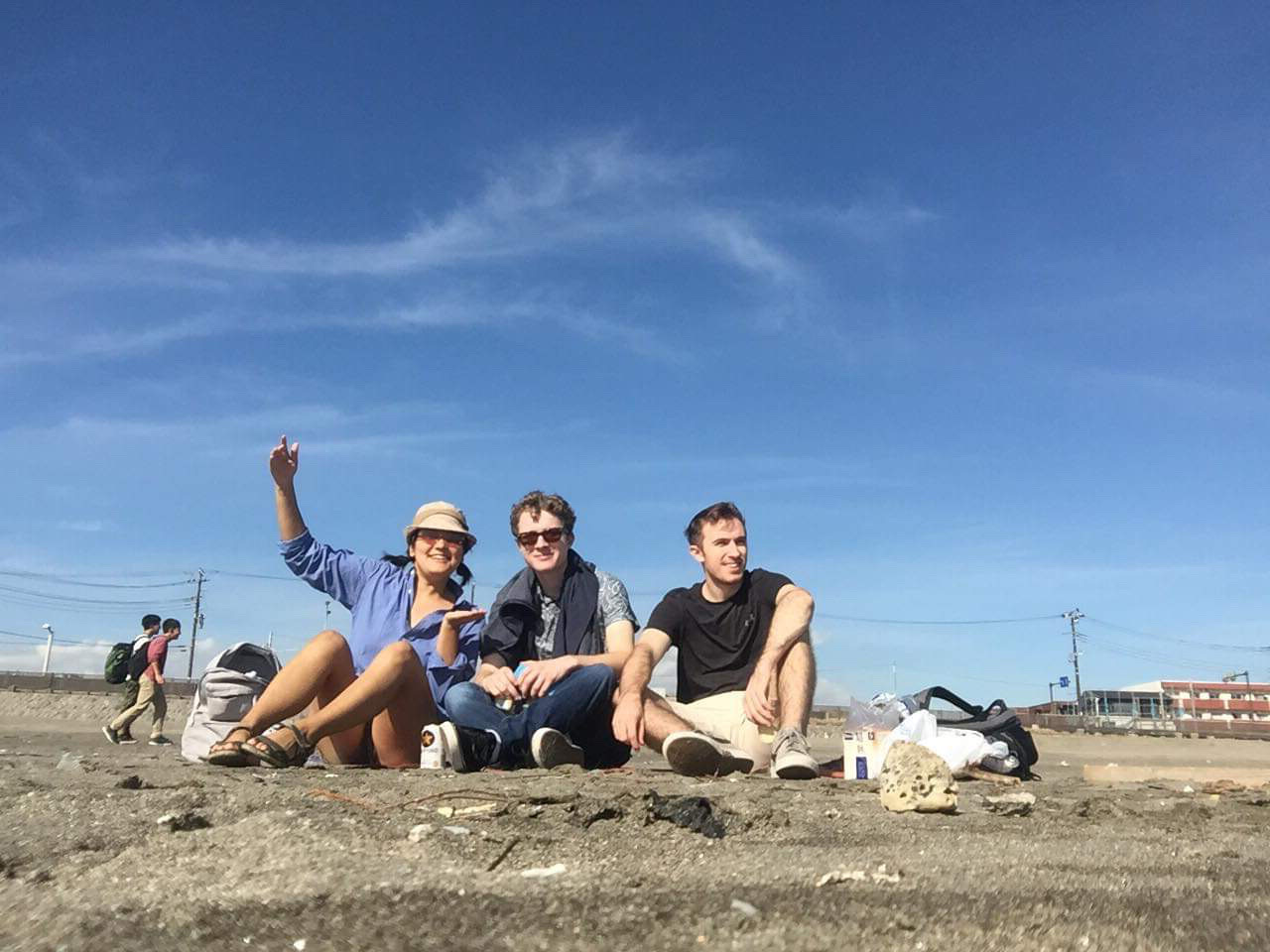
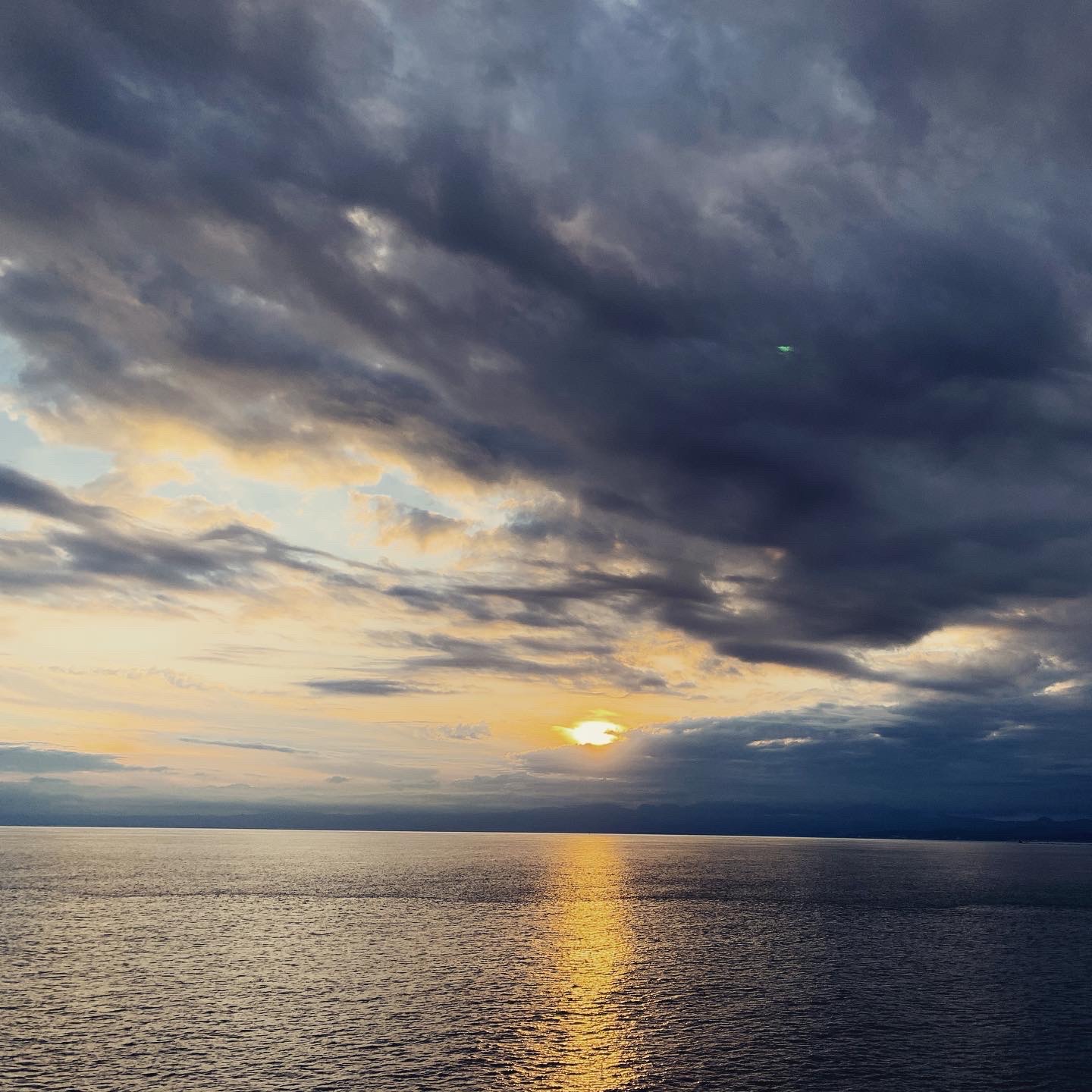
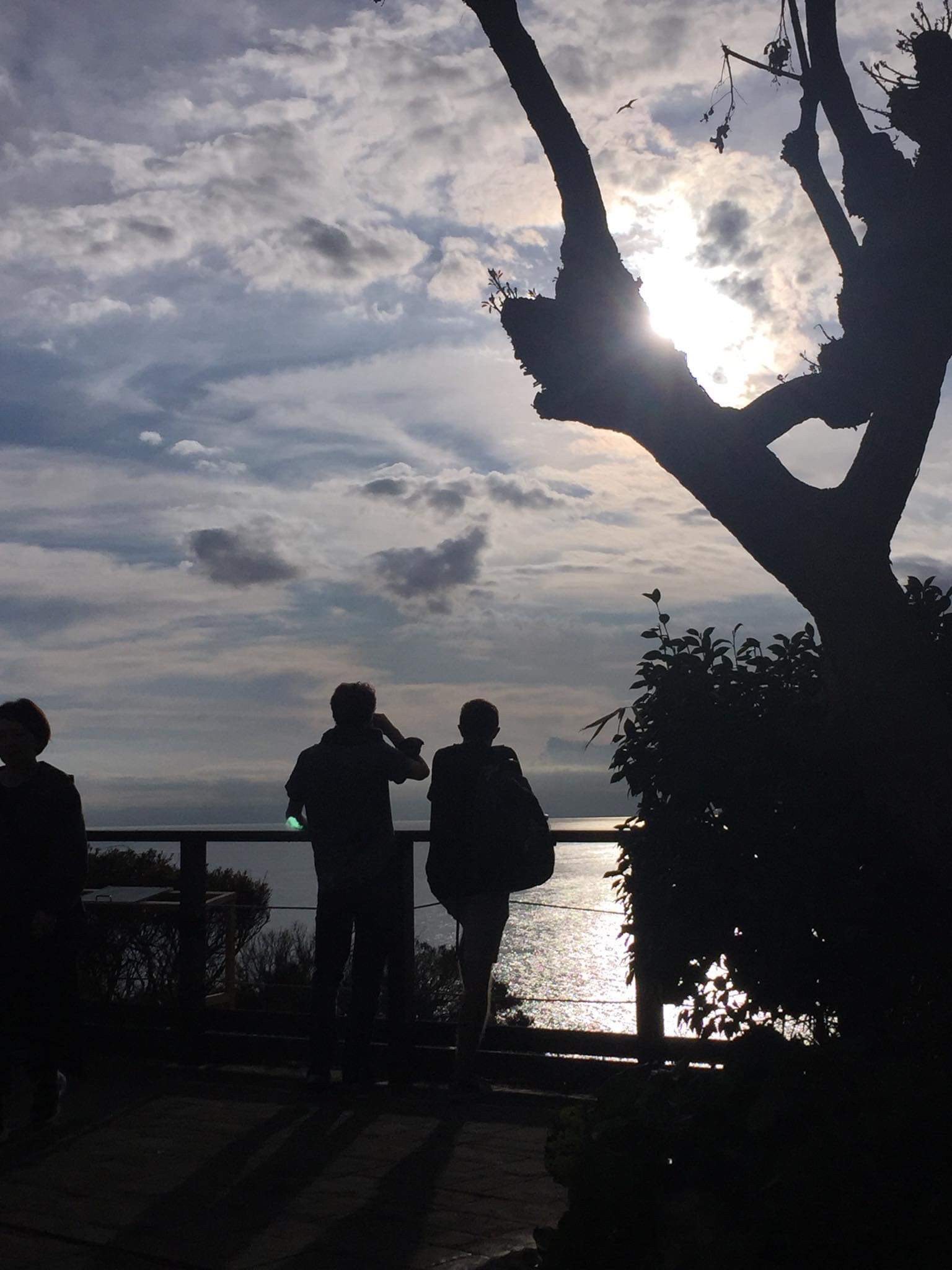
Japan is focused much more on train transportation than the United States. The metro system in Tokyo is highly advanced and is a twisting maze akin to an underground city. The trains and stations feel almost futuristic. This is why the station near Kamakura stood out to me. It felt very old fashioned, and the workers on the station platform leaned over the track and waved a flag to signal the train to stop. We looked out of the window of the train and were greeted by the view of the Pacific for the entire ride. At Enoshima, we were able to watch the sunset over the distant mountain ranges. Having been surrounded by concrete by months, seeing some of the most beautiful views of my life was awe-inspiring.
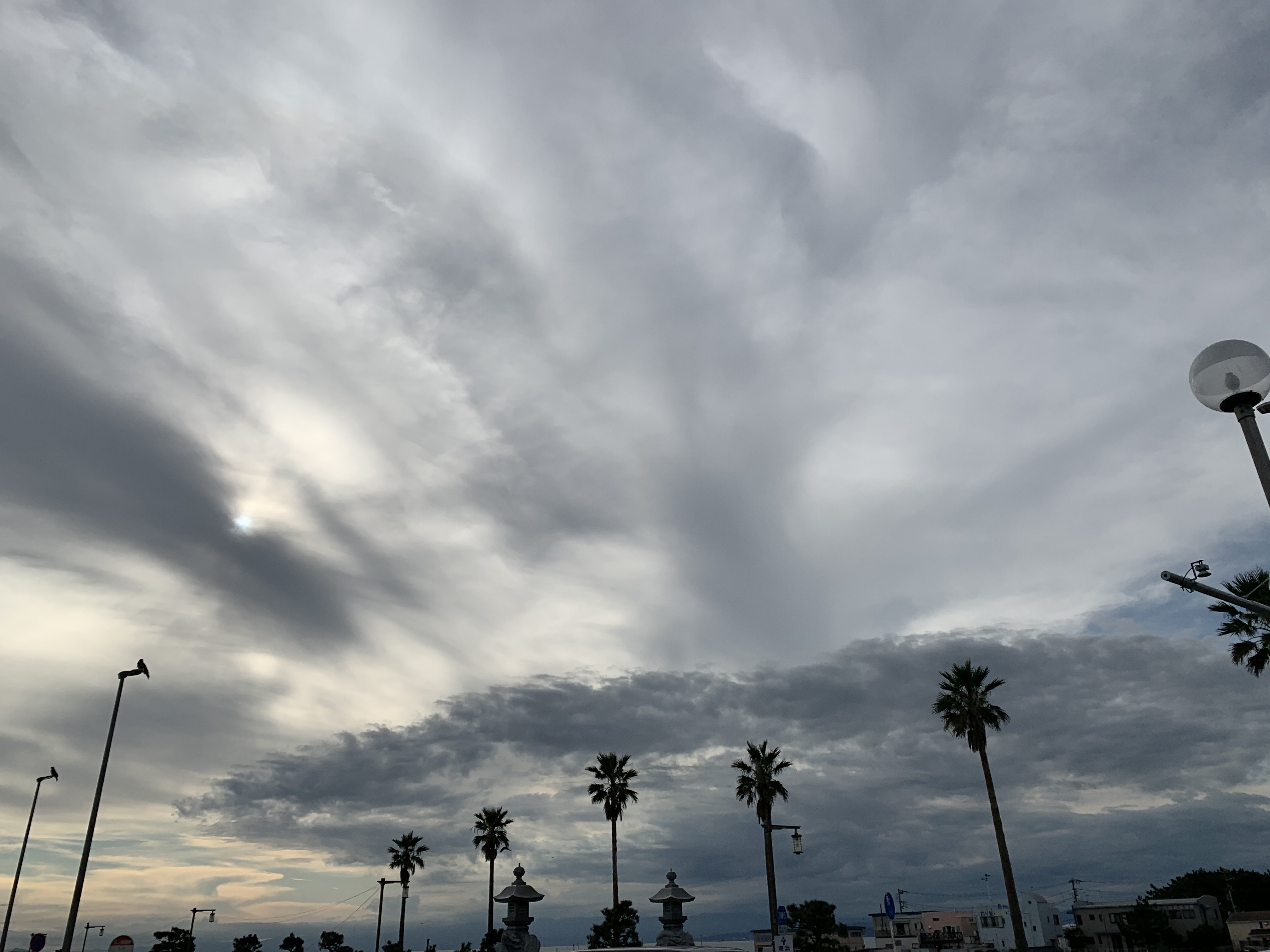
The next day, we visited a Zen Buddhist temple. Zen is a school of Buddhism that focuses on meditation and self-reflection. At the temple, we meditated for the first time. I never understood the purpose behind meditation, but after trying it I am starting to understand. Before and after meditation, there are slow and methodical actions that must be taken. This was calming while at the same time it took my mind off of my day to day worries. This put me in a relaxed mental state to try to clear my mind. At one point, I was hit by a stick by the Buddhist monk. This surprisingly did not break my relaxation as much as you might think.

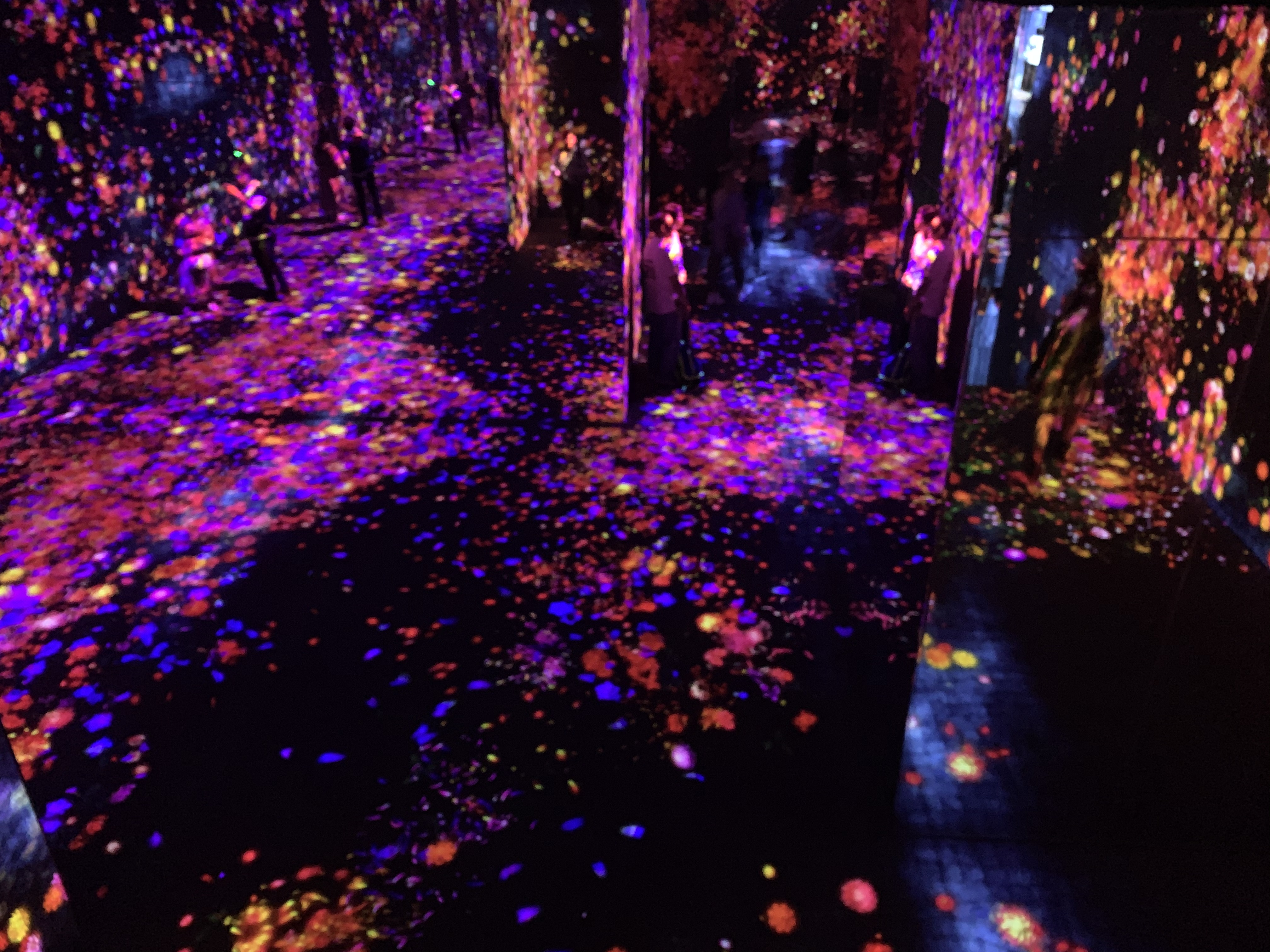
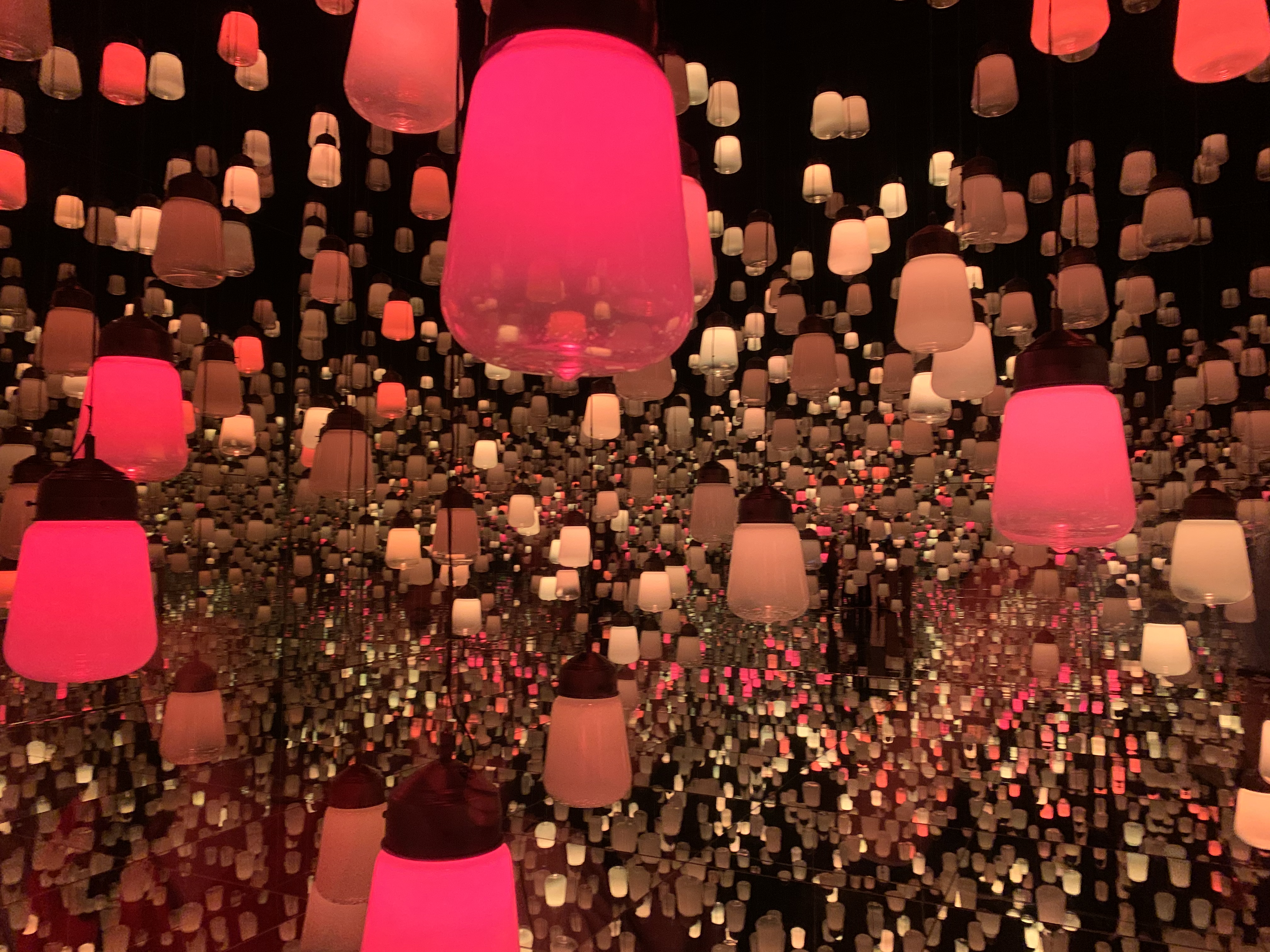
That weekend, we went to Odaiba, an artificial island in Tokyo Bay, to a place called TeamLab. This experience is difficult to put down into words. TeamLab is a digital art museum, and every room we entered bombarded our senses with lights and sounds that shocked and amazed us. I thought of just how much work had to have gone into creating the art in order to make it work the way it did.
As the week went on, I felt the urge to leave the center of Tokyo again. I took a friend with Jacob and Joe to Funabashi, a suburb about 1 hour by train away from my dorm. We went to an onsen where we ate a relaxing meal on tatami mats before entering the mixed bath. This was my first time going to an onsen in cool weather which improved my experience greatly. This made me more fully understand why onsens are so popular in Japan.

I was relaxing in one of the outdoor tubs when I saw a woman worker walk through the men’s shower area and into the bathing area. I was shocked to see this. I could never picture something like this happening in the United States. Just one day before, I saw a women cleaning the men’s bathroom when it was still occupied by several men. I am still wondering about the reasoning behind this cultural difference. Perhaps people in Japan are more comfortable with nudity than people in the States.

The halfway point of my time in Japan has come, and there is still much more that I want to do. I have several planned excursions out of Tokyo, including a plane trip to the tropical island of Okinawa in two weeks. I am interested to see the cultural differences in Okinawa from Tokyo and what new things I can learn about and from life in Japan.
Japan: Part 4

As the weekend approached, I fell asleep knowing that my family was on the flight on their way to Tokyo. I met them in a train station just before our shinkansen bullet train was to leave for Kyoto. 2 and a half hours later, we pulled up to Kyoto station and I with my jet-lagged family walked through the old streets of the ancient capitol of Japan. I felt like I had arrived in a new country. The atmosphere of Kyoto felt totally different from Tokyo. The quiet streets lined with old architecture made me feel like I traveled a century into the past.

We tried to see as much of Kyoto as we could before Typhoon Hagibus was to slam into the coast. We were not directly in the path of the typhoon, but this was to be the most powerful typhoon to hit Japan in decades.

On the day of the typhoon, we woke up to pouring rain. It did not stop until late that evening. We went to a cafe nearby our hotel and enjoyed breakfast while watching the storm roll in.

The next day, I woke up to perfectly blue skies. It was hard to believe that a typhoon hit just the day before. We used this perfect weather to take a train to Nara. Nara is a town famous for its dear park. I had heard stories of deer coming up to people and bowing to get food, but I did not think that was common.

As soon as I stepped into the park, several dear came up to me, bowed, and then started nudging me if I did not immediately give them food. Where I am from near Chicago, it is rare to even spot a deer, much less have one come up to you. After this, we stumbled across old back streets with Japanese restaurants at every turn.

Our next stop was Osaka on the same day. Osaka was jaw-dropping. We walked out of the station and made our way to a river that we had heard was famous for its bright lights and night life. It did not disappoint. I had never seen any place so lively as Osaka. Bands played along the river as people dressed up in costumes roamed the streets. Street food vendors shouted as the smell of their products filled the air. Go-Karts sped down the main roads. It was hard to believe that I was not in an amusement park.

The next day, we took a shinkansen back to Tokyo. We filled the weekend with so many activities that we were exhausted. Despite this, my family was excited to see Tokyo. We walked to Asakusa, an older district of Tokyo with the famous Senso-ji temple. There is much to see in Tokyo with so little time, so I hope I can be a good tour guide and show them the best places of the city.

(I will add photos soon. WordPress will not let me add them at the moment.)

Japan: Part 3

Recently, I have become more aware of time passing and that I need to make the most of the short time that I have abroad. My last two weekends were packed with activities and new experiences.

I’ve been spoiled for choice with things to do in Tokyo. My dormitory building is located directly next to a metro station. This connects me to what has been called the best, most modernized, and most efficient metro system in the world. It can quickly and cheaply move me around the largest metropolitan area in the world.

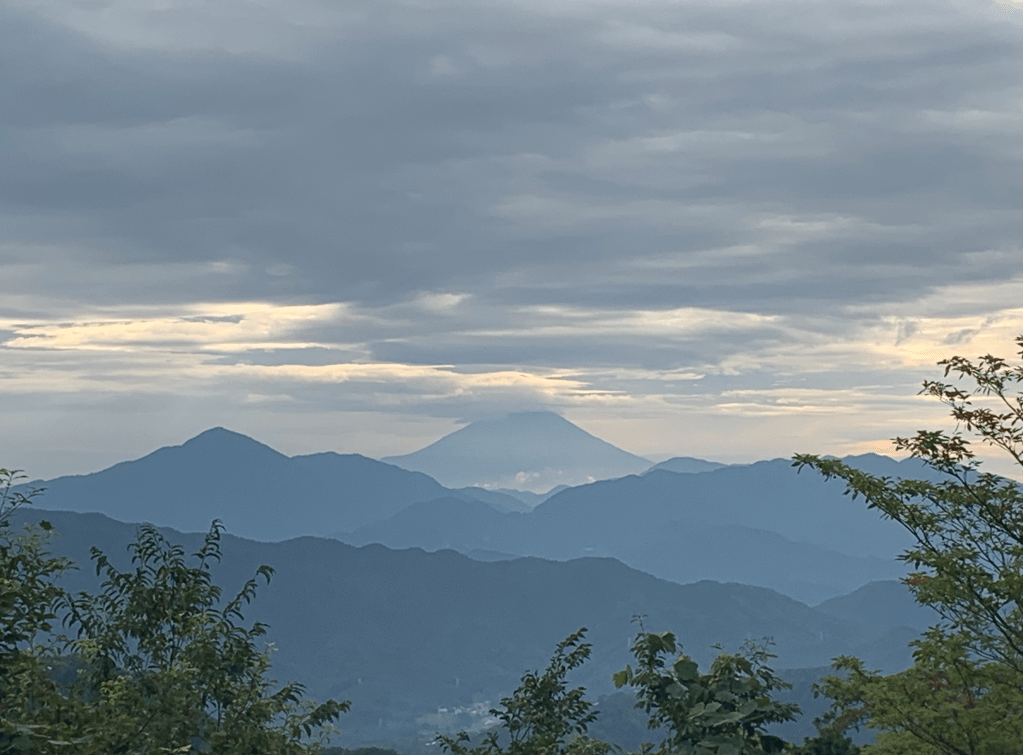
Despite this, I still found myself itching to get out of the city and into nature. I look a train with some of my friends to Mt. Takao. This mountain, located a little over an hour away from my dorm by train, had a beautiful view of both Tokyo and Mt. Fuji. As we were moved up the mountain by a chair lift, the Tokyo skyline in the distance became visible. It was truly awe inspiring to see just how far the city stretched on.

After a long walk to the summit after the chair lift dropped us off, we decided to return to the small town at the base of the mountain to get some food. Upon arriving at the chair lift station, we found it closed. Great. What ensued was a long and steep walk in the muggy heat while thinking of nothing but filling our empty stomachs.

Finally, the path leveled out and we saw the town appear in the distance. We arrived at a restaurant just before it closed. I ordered katsudon without hesitation. Katsudon is a dish of fried pork on rice, often served with an egg. Now that we were full and cooled off, one of my friends suggested going to an onsen, which is a naturally heated hot spring. That is how we spent the next hour and a half relaxing at the base of a mountain in a hot spring.

During the following week, we went to Yasukuni Shrine. This shrine is controversial because of its veneration of Japanese war criminals from the Second World War. Most shrines I have been to have a relaxed atmosphere, but I felt only tension at Yasukuni. There were police watching visitors’ every move, and the place was rather quiet.

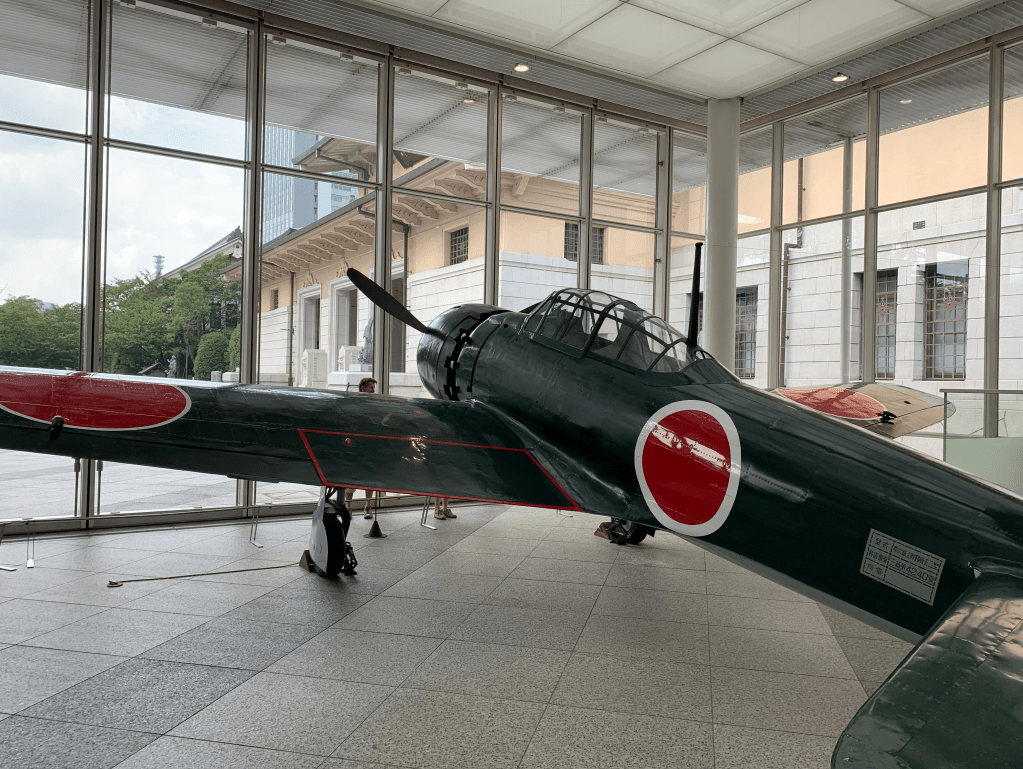
Afterwards, we went to the nearby Japanese military history museum. I am very interested in 20th century history, and so I have learned a lot about World War II. I found it interesting what they chose to include, and more importantly, what they chose not to include. This helped me to more fully understand the ongoing issues rooted in history among China, South Korea, and Japan. There was not mention of the war crimes committed in China and South Korea. This got me thinking of the United States as well, and how the US does not readily admit its historical faults either.

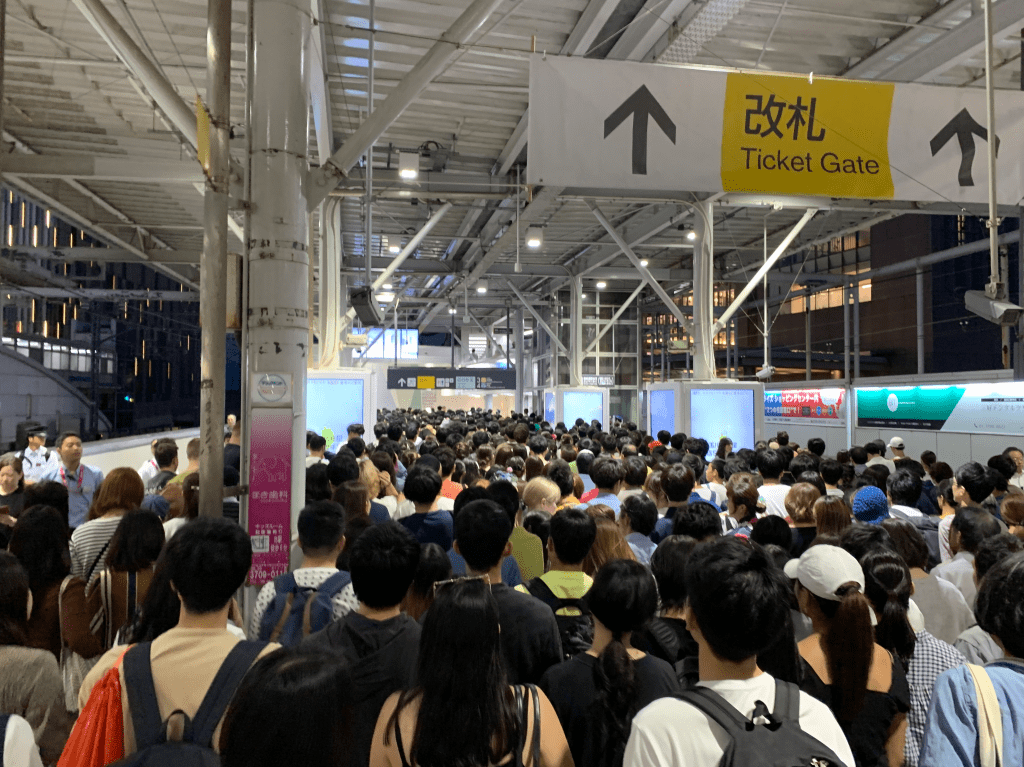
The following weekend, I went with a friend to what I expected to be a normal fireworks show. After a 40 minute train ride, we pulled up to the station to see an unbelievable number of people all pushing towards the exit. Police were everywhere shouting commands in Japanese through megaphones to the crowds. It struck me that this was all for the fireworks show.

The entire town was flooded with people. It was without a doubt the largest crowd of people I have seen in person in my life. 400,000 people were in the park where the fireworks were being set off. This does not include all of the people in the surrounding areas. The fireworks show was incredible and worthy of the crowds that came out to see it. Exiting the park was more chaotic than entering it. It took us about 20 minutes to move from the park to the nearest street. We decided to walk to a further station rather than taking the one next to the park, as an anticipated a line of 400,000 people waiting to take the train from that station.

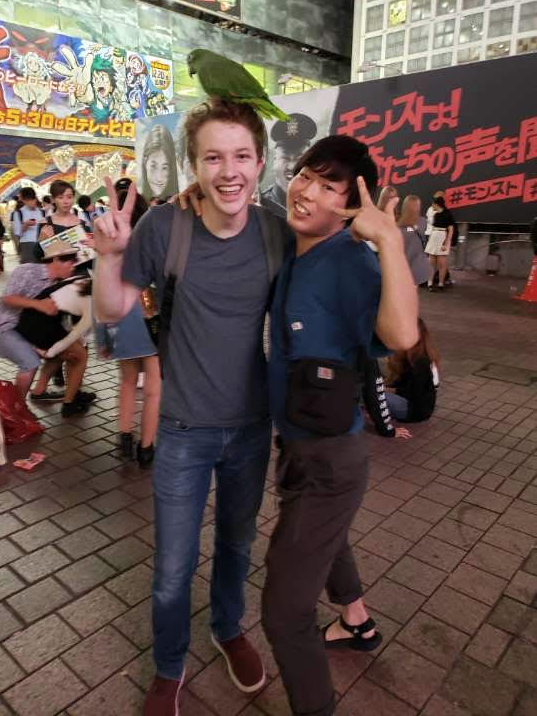
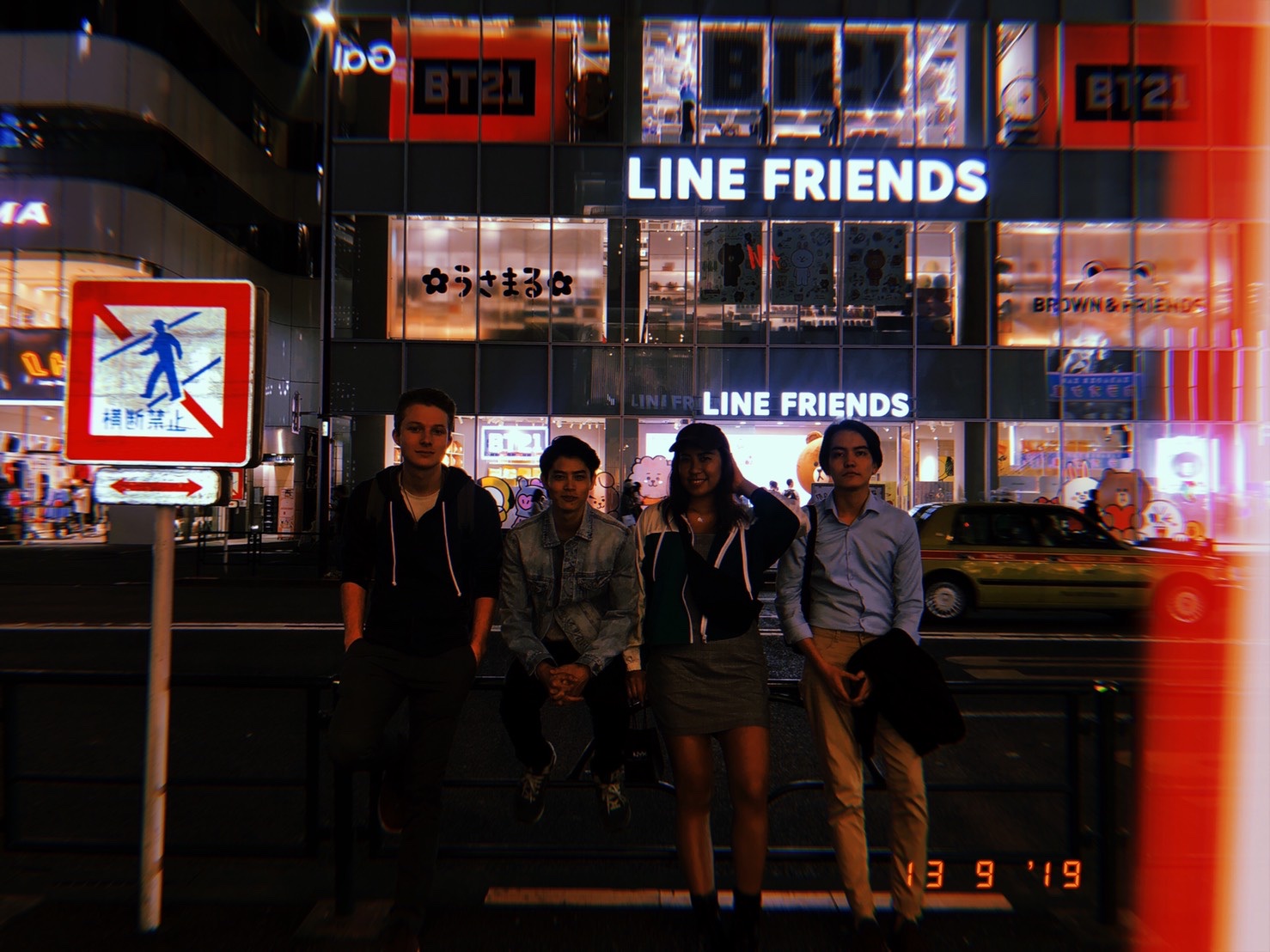
That night, our train transferred through Shibuya. We decided to spend some time in Shibuya to experience the unmatched nightlife of the area. Next to Shibuya crossing, we met an energetic Japanese man with a parrot. Within a minute, he put the parrot on my head and lined me up for a photo. The parrot on my head caused me to get more stares than I usually do.

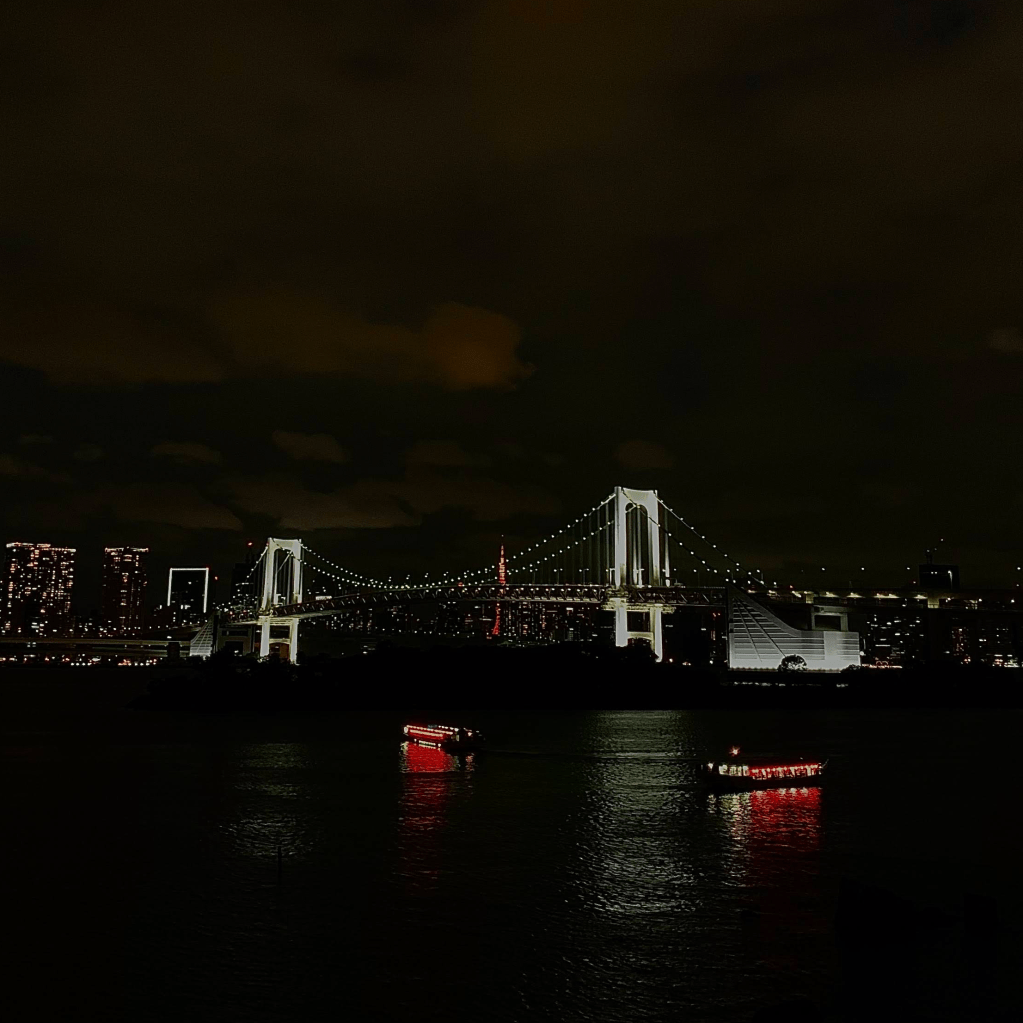
The following day, I visited Odiaba, a high end area on an artificial island. This was my first time seeing the Pacific Ocean, and the view was incredible. We went to Taco Bell (the best place to get authentic Japanese cuisine) and sat down with a great view of of Rainbow Bridge and the Tokyo skyline.

“September” by Earth, Wind & Fire started playing, and we saw two teenage Japanese people singing along to it as we were. We introduced ourselves and we learned that they were fluent in English. We shared our experiences in Japan which opened a conversation about Japanese culture. They talked about how below the surface, there are many issues in Japan that can’t be seen by most tourists. Living here, I have begun to pick up on some of those issues. They did not go into much detail, but they discussed how Japanese culture can sometimes suppress individualism.

My experience in Japan has shown me that the collective is the focus rather than the individual. It can be difficult to notice from the standpoint of a tourist, but over time, small things have shown me that this can often be the case.

Japan: Part 2

Before flying to Japan, I never could have imagined getting accustomed to living in the country. I am now not only getting used to living here, I am starting to feel at home. My home in Illinois is starting to feel as far away as it really is. It is difficult to explain how it both feels like I just arrived in Japan while at the same time feeling like I have been here for a long time.

Over the past two weeks, I started to really interact with locals for the first time. I have also become good friends with people from several other nations. I am roommates from people from Turkey and Bulgaria and I live in the same building with people from Malaysia, Uzbekistan, and Kazakstan. Outside of the dorm, I have met people from Australia, India, Vietnam, Korea, and of course, Japan. This has been a sudden change from my culturally homogenous town in Illinois.

I expected cultural differences to be a larger barrier to friendship than it actually has been. It is obvious that we all have more similarities than we have differences. All of the CSBSJU students immediately became friends with the students from other nations.

One night, I went to a part of Tokyo that I had never been before, Omote-Sando and Harijuku, with a group of people in which I was the only American. It was not until I returned to the dorm that I realized I was the only American as it felt so natural.

It is difficult for me to pinpoint what parts of me are changing but I know I am without a doubt changing. I have not even spent a month in this country and I already know that the experiences I have had will change me for the better.

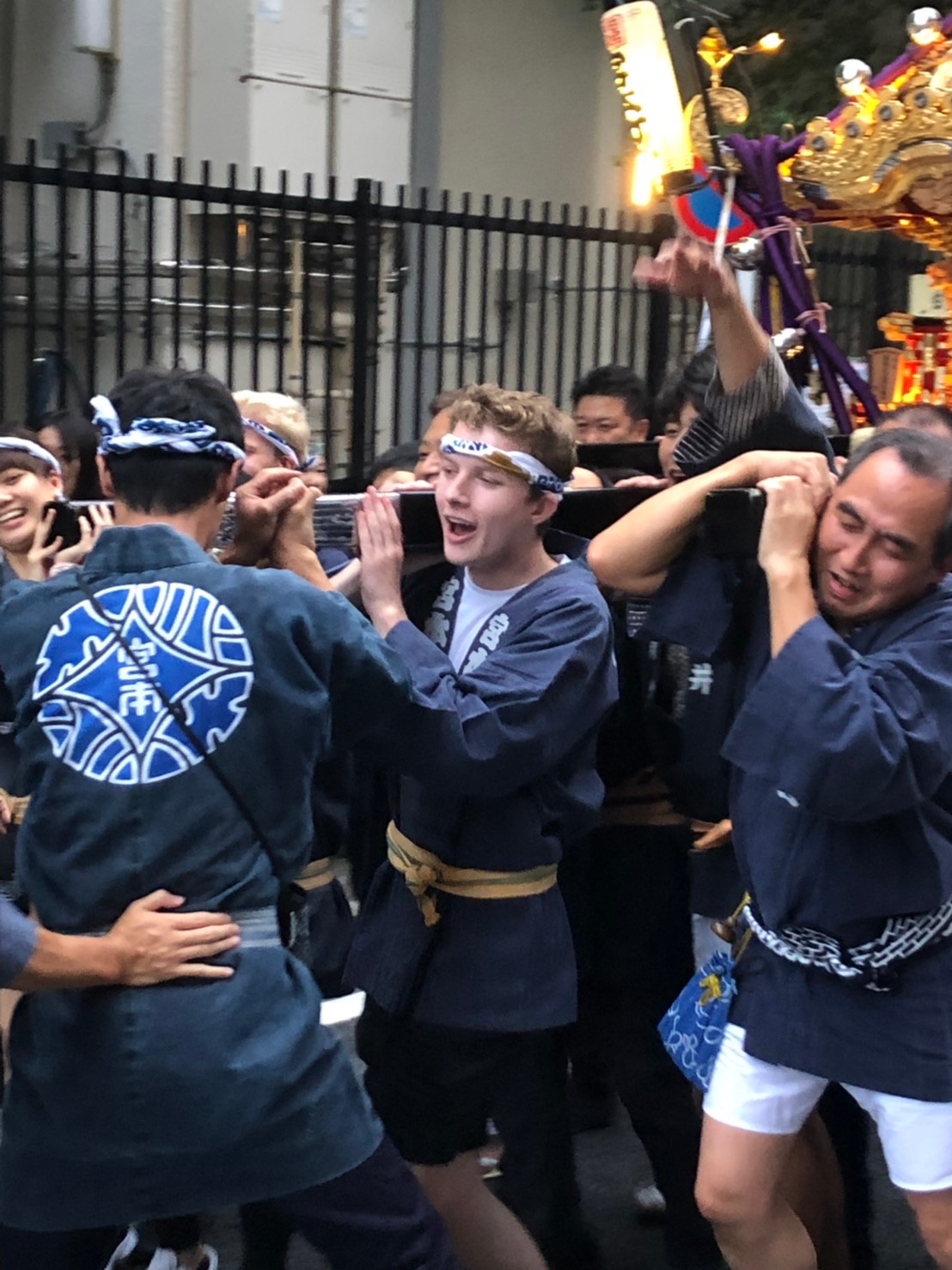
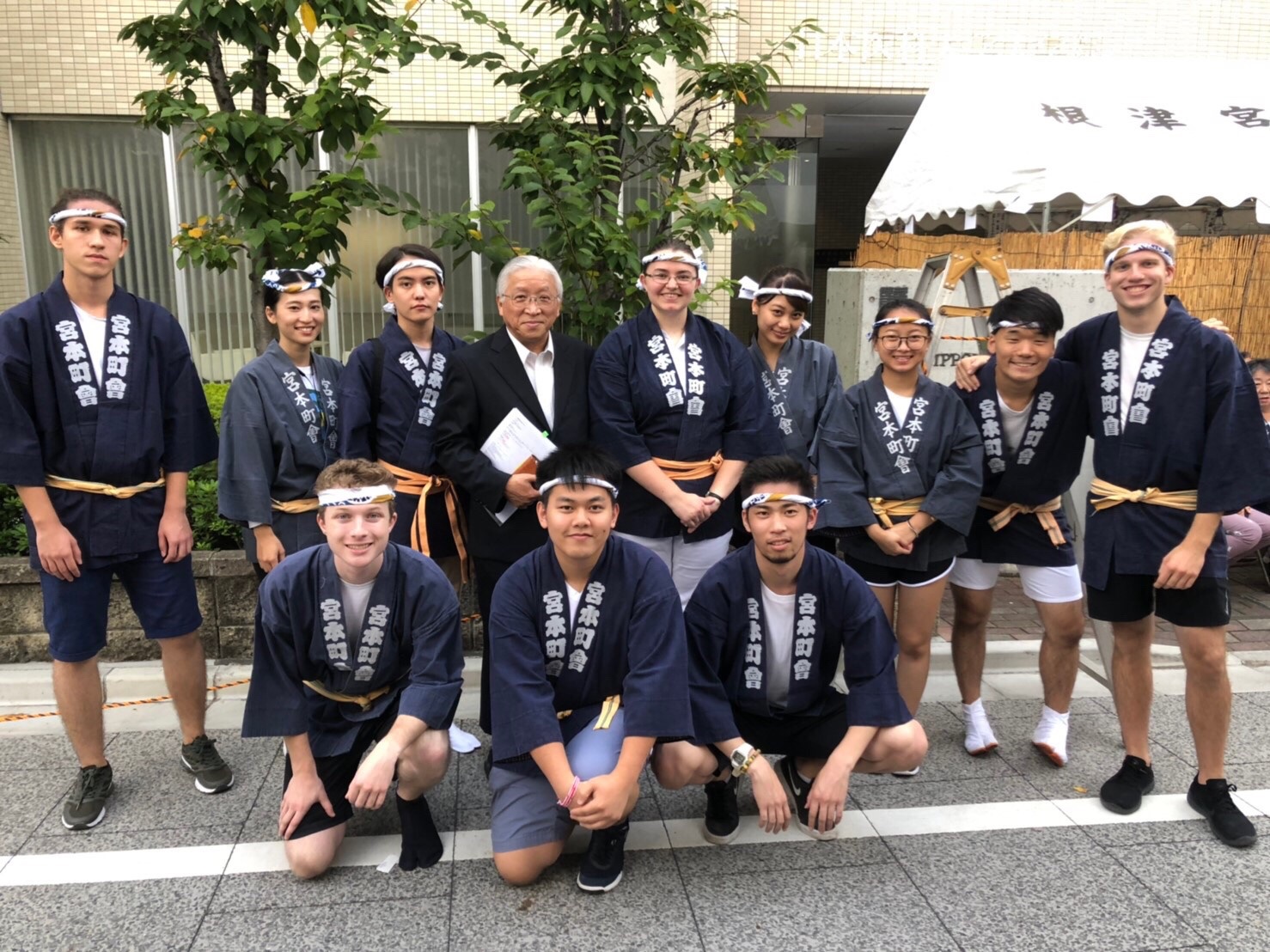
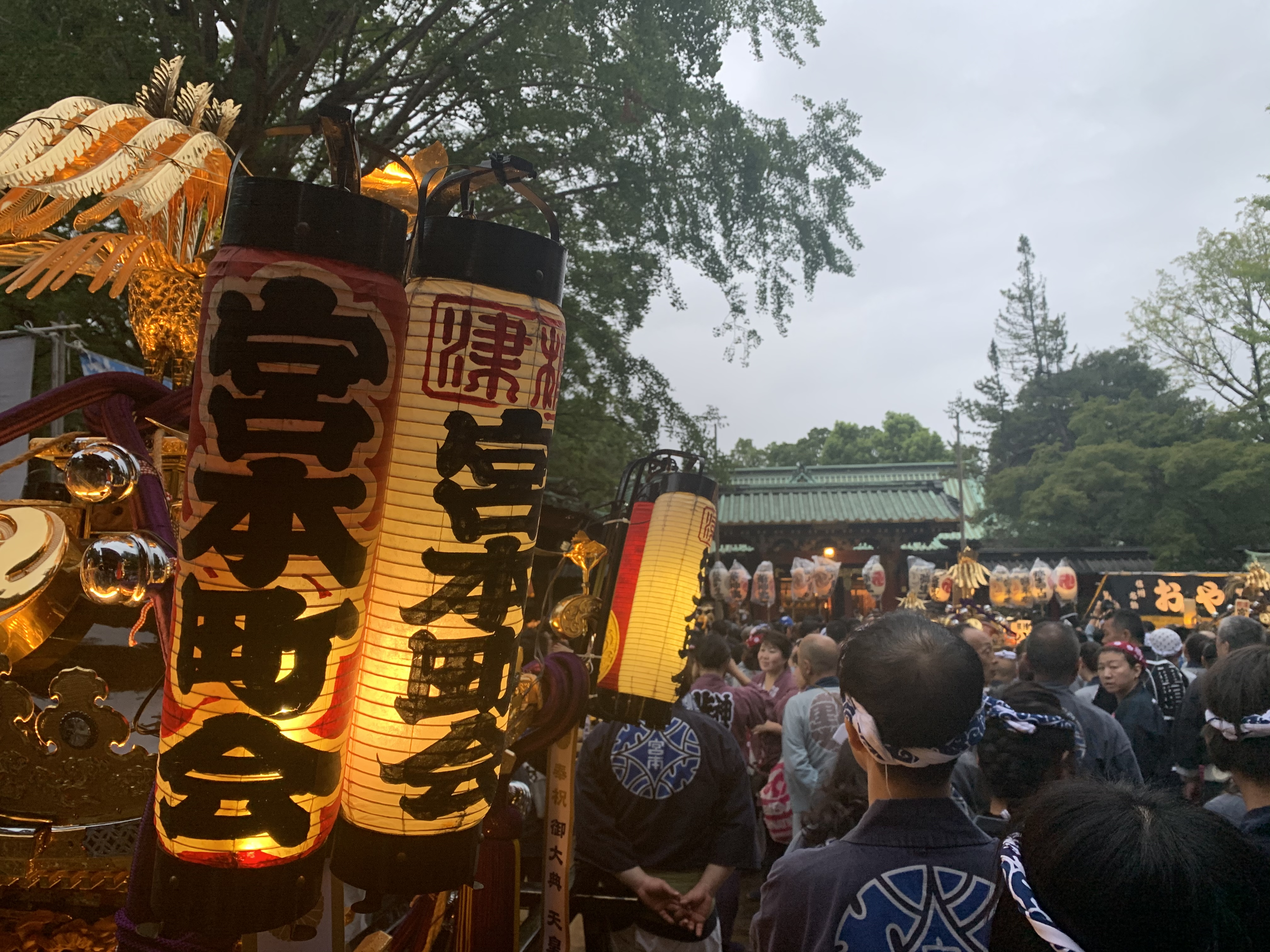
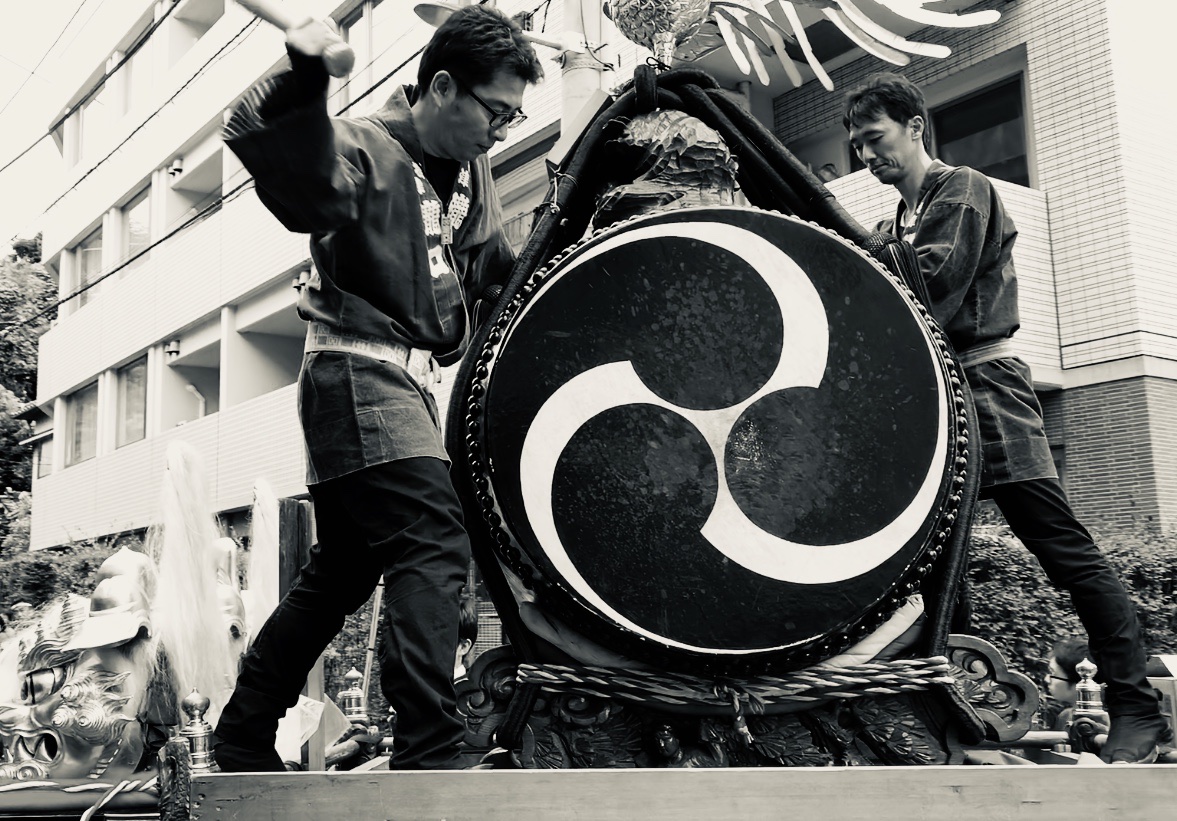
As I am writing this, my shoulders and calves are still sore from one of the coolest experiences of my life. This past weekend was the ‘Nezu Matsuri’, or ‘Nezu festival.’ Amazingly, we had the opportunity to participate in this centuries-old Shinto tradition. I signed up to carry a mikoshi, a heavy object that is believed to hold a Shinto deity, around the Nezu area. On Friday, only a few of the international students signed up. This meant that I was carrying the mikoshi with mostly Japanese people who have been doing this for years.

We had no practice before picking up the mikoshi. We were handed jackets and a headband and were marched over to the starting location. I was asked if I wanted to take the “hero position” while carrying. I, of course, said yes. Traditional Japanese music started playing as we shouted and clapped and picked up the mikoshi. That was when I realized why it was called the “hero position” The metal beam dug into my shoulder while people in front of the mikoshi pushed against it. They told me I also had to dance and shout. Despite this, I could not help but smile because of the incredible event I was a part of.

Crowds gathered and took photos as we chanted “sore!” “sa!” and “sui!” After a long night we made it back to our starting point. After putting down the mikoshi I realized how exhausted I was. A local shop provided free beer and onigiri (rice balls) for us. The matsuri was an amazing display of the sense of community in this area. At the same time, they were so welcoming to people outside the community including us.

The next day I woke up with horrible bruises on both of my shoulders. That night, we had to carry the mikoshi again but for twice as long. I managed to push through and I was so happy to have been able to share that experience with the rest of my friends. It is impossible to explain what the experience was like through words or pictures. The spirit of the matsuri area was unlike anything I have seen before. It is an experience I know will always stay with me.

Japan: Part 1

It’s hard to believe that nearly two weeks have passed since I landed in Japan. The first few daze were a daze of sleep deprivation and intense culture shock. It took my a while to fully realize that I was actually on the other side of the world.

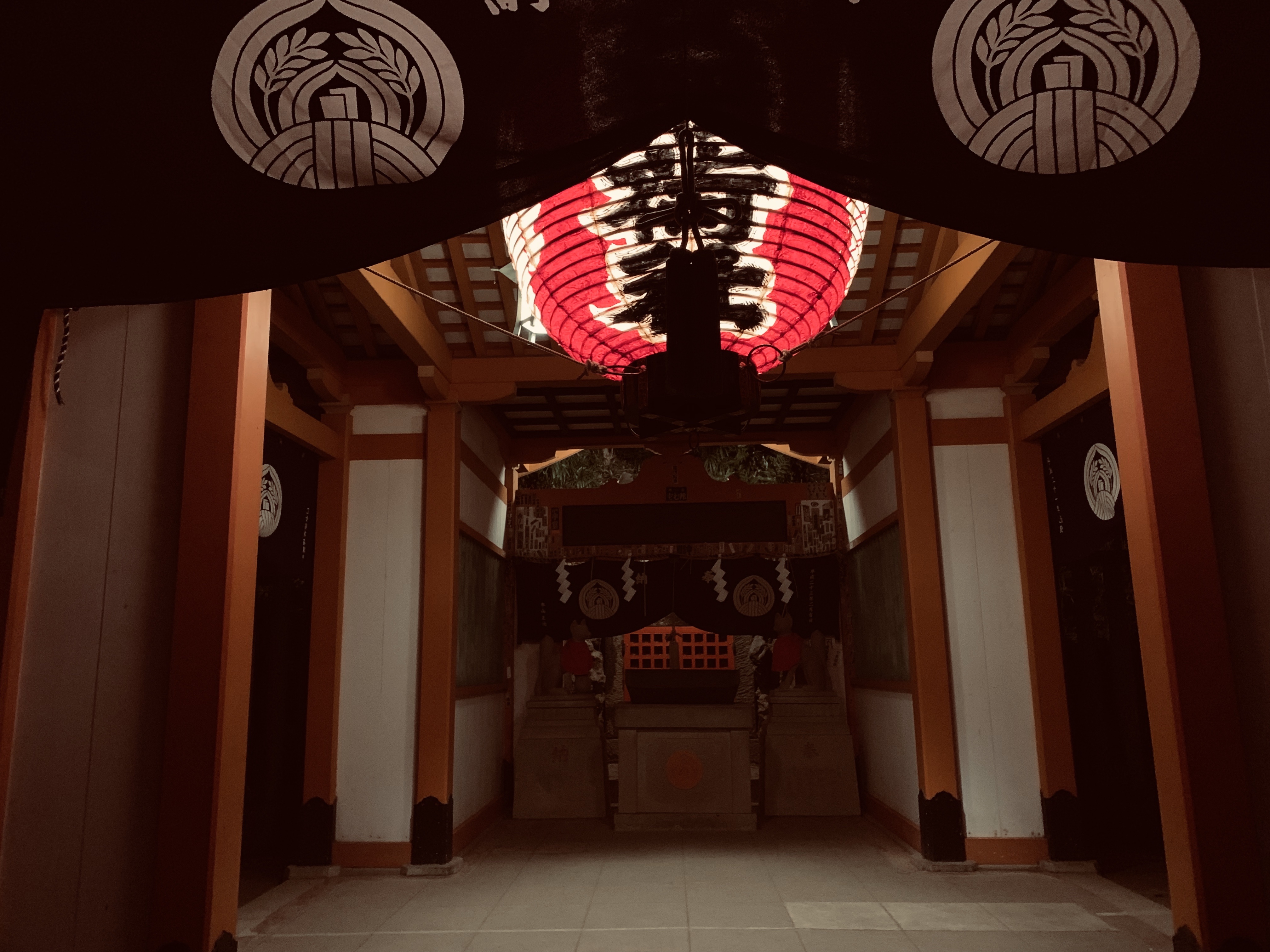
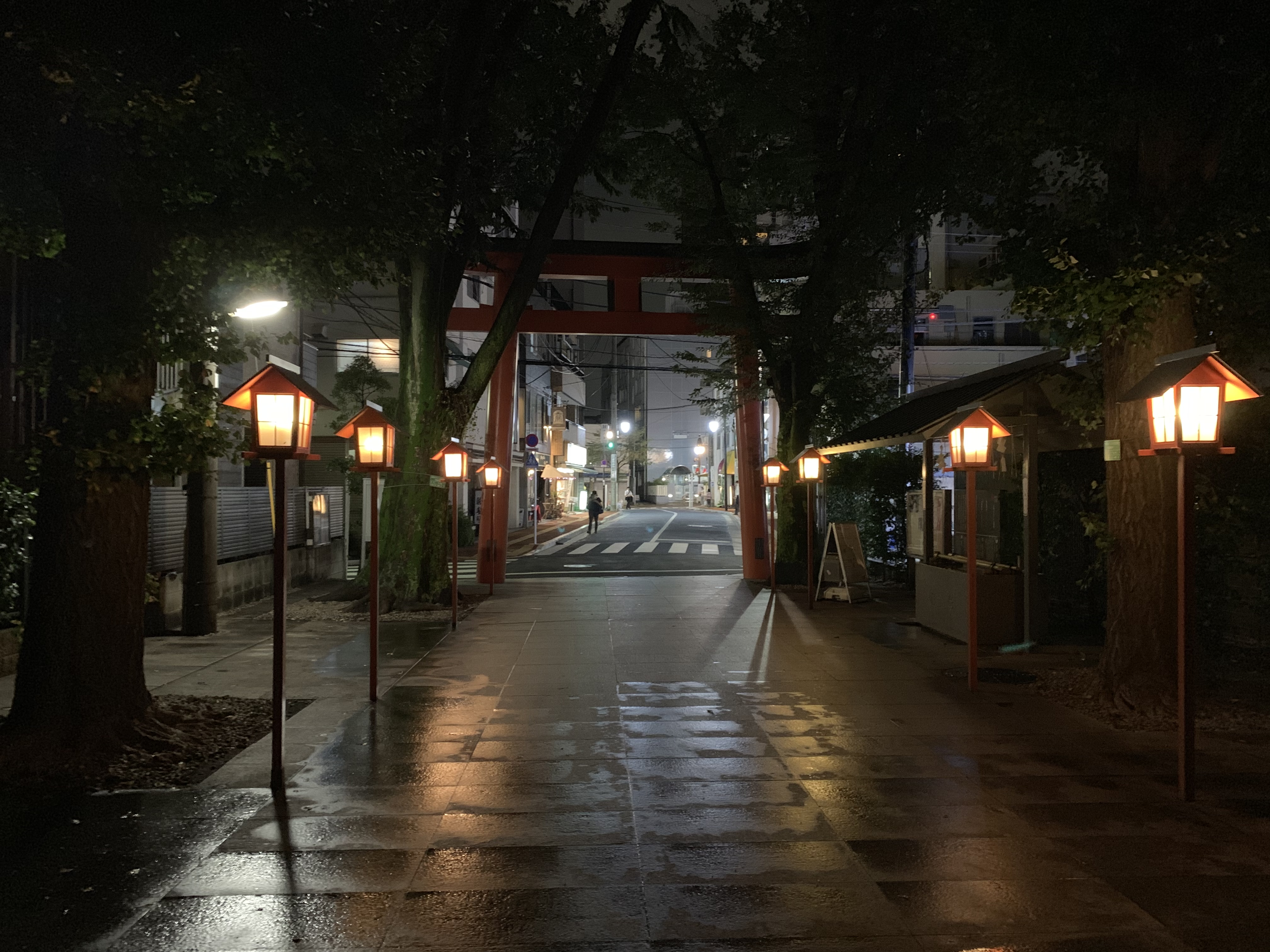
My first morning in Japan, I woke up at 4:00 and went for a run with two of my friends at 6:00. That was the first time I started to realize where I was. It was unbelievably quiet for the most populated city in the world. Our run was short-lived as we kept stopping to sightsee. One of our first stops was the beautiful Nezu shrine, a slice of Japan that existed before Western influence. It was the first structure of its kind that I had ever seen.

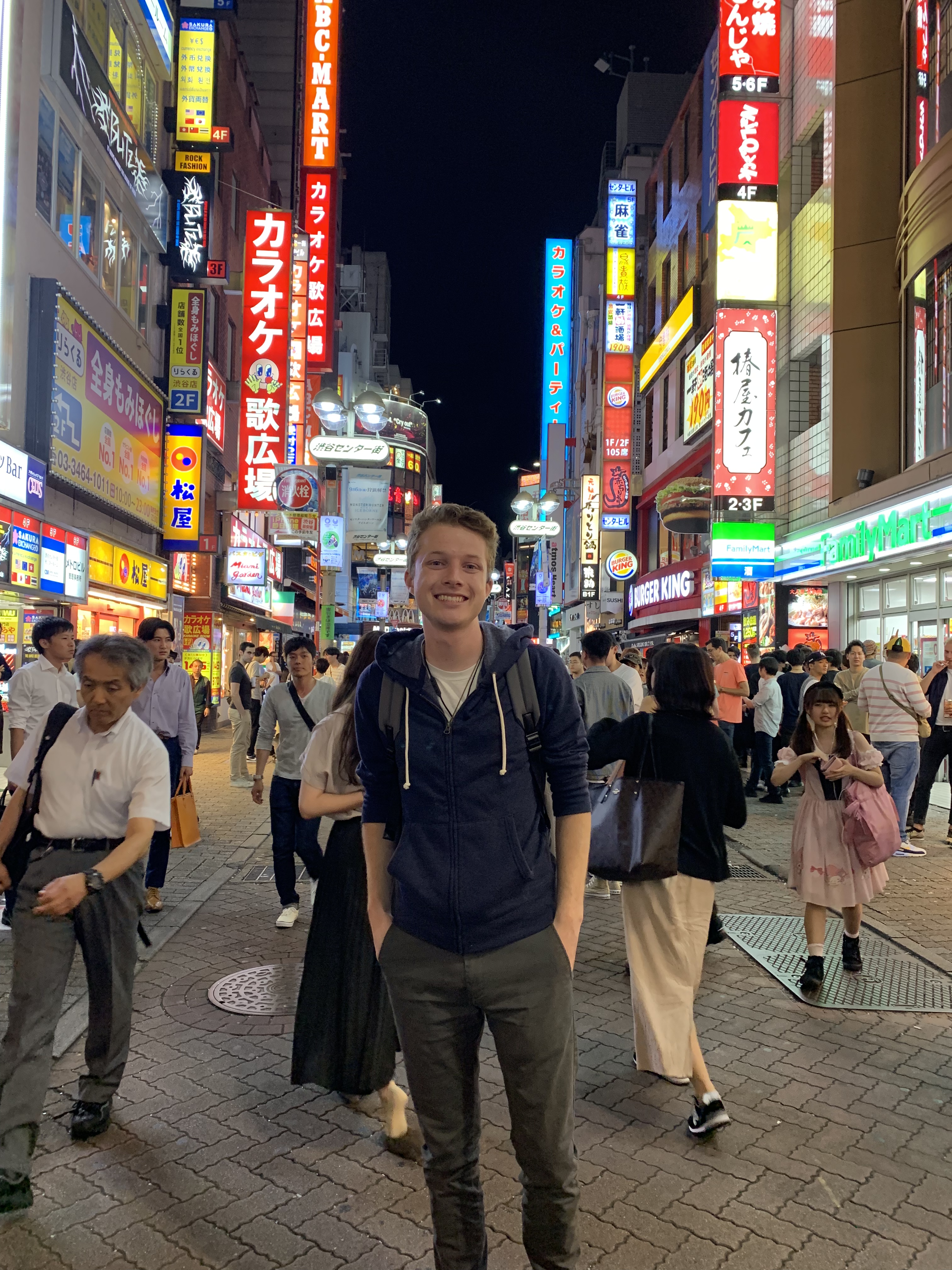
That weekend, sleep-deprived and running on adrenaline, I decided to go to Ueno, Shinjuku, and Shibuya. Ueno was the first part of Tokyo that I saw that had neon lights like I had seen in the media. I was amazed, but it never could have prepared me for what I saw in Shibuya the following day. Shibuya crossing had one of the largest groups of people I had seen in my life. The night was lit up almost as bright as noon with the neon lights illuminated the mass of people below.

The following evening I went to the top of the Tokyo Metropolitan Government Building. The elevator doors opened and I was in awe as I saw lights as far as the eye could see. I knew at that time that 4 months would not be enough time to explore this incredible city. It was one of the most incredible views I had ever seen.

Karuizawa was the first time I left Tokyo. It was incredible to see the concrete jungle of Tokyo quickly transition to incredible mountain ranges. It was relieving to get out of the oppressive heat of Tokyo, and it was also a lucky coincidence that we were not in Tokyo the day Typhoon Faxai slammed into the city.

The days were packed with activities, each of which created memories that will stick with me for the rest of my life. I know that there are many more memories to be made in the following months.

Pre-Departure

My senior year of high school, I decided that I wanted to study abroad in Japan at CSB/SJU. Since then, I have been counting down the years, months, days, and now almost hours. In just a few days, I will be in the air over the Pacific Ocean on my way to Japan.

I have been so busy recently getting everything in order that I have not really stopped to think about how much my life is going to change. Everything from the time of day, the foods I eat, the language I speak, and the culture I have grown accustomed to will suddenly change after I cross that vast stretch of ocean.

I know I cannot mentally prepare myself for just how shocking this change will be. I truly do not know all of the aspects of my life that will change, all that I know is that they will be countless, some of which I can’t imagine at this point.

I recently wrote an essay outlining my expectations for this trip, and it gave me an opportunity to really think about all of the changes that I should expect. It was easy to push that out of my mind in the chaos of preparing for a transpacific flight, and it is both nerve-racking and exciting to finally contemplate. I am sure that I will have plenty more time to think on this during my upcoming 13 hour flight.

The next time I’ll be writing on this blog, I’ll be over 6,000 miles away in Tokyo, Japan. See you then.

Introduce Yourself (Example Post)

This is an example post, originally published as part of Blogging University. Enroll in one of our ten programs, and start your blog right.

You’re going to publish a post today. Don’t worry about how your blog looks. Don’t worry if you haven’t given it a name yet, or you’re feeling overwhelmed. Just click the “New Post” button, and tell us why you’re here.

Why do this?

  • Because it gives new readers context. What are you about? Why should they read your blog?
  • Because it will help you focus you own ideas about your blog and what you’d like to do with it.

The post can be short or long, a personal intro to your life or a bloggy mission statement, a manifesto for the future or a simple outline of your the types of things you hope to publish.

To help you get started, here are a few questions:

  • Why are you blogging publicly, rather than keeping a personal journal?
  • What topics do you think you’ll write about?
  • Who would you love to connect with via your blog?
  • If you blog successfully throughout the next year, what would you hope to have accomplished?

You’re not locked into any of this; one of the wonderful things about blogs is how they constantly evolve as we learn, grow, and interact with one another — but it’s good to know where and why you started, and articulating your goals may just give you a few other post ideas.

Can’t think how to get started? Just write the first thing that pops into your head. Anne Lamott, author of a book on writing we love, says that you need to give yourself permission to write a “crappy first draft”. Anne makes a great point — just start writing, and worry about editing it later.

When you’re ready to publish, give your post three to five tags that describe your blog’s focus — writing, photography, fiction, parenting, food, cars, movies, sports, whatever. These tags will help others who care about your topics find you in the Reader. Make sure one of the tags is “zerotohero,” so other new bloggers can find you, too.

Design a site like this with WordPress.com
Get started